Panjshir for First-Time Visitors: The Valley, the Tomb, the River and How a Day There Is Arranged
By Tour.af
Panjshir is one of the easiest Afghan provinces to reach from Kabul. It is also one of the most misunderstood. Some people know it only from news footage. Others picture a remote trekking region several days from the capital. In practice it is a green, steep-sided valley in the northeast. Many visitors see it on a full day out of Kabul, and a smaller number stay longer to walk.
This note explains what Panjshir is, what people actually go to see, when to go, and how a visit is organised under the current rules for foreign tourists. We are Tour.af, a licensed operator based in Kabul. Everything here comes from the information we publish ourselves, and we have tried to keep it to things a first-time visitor can use.
What Panjshir is
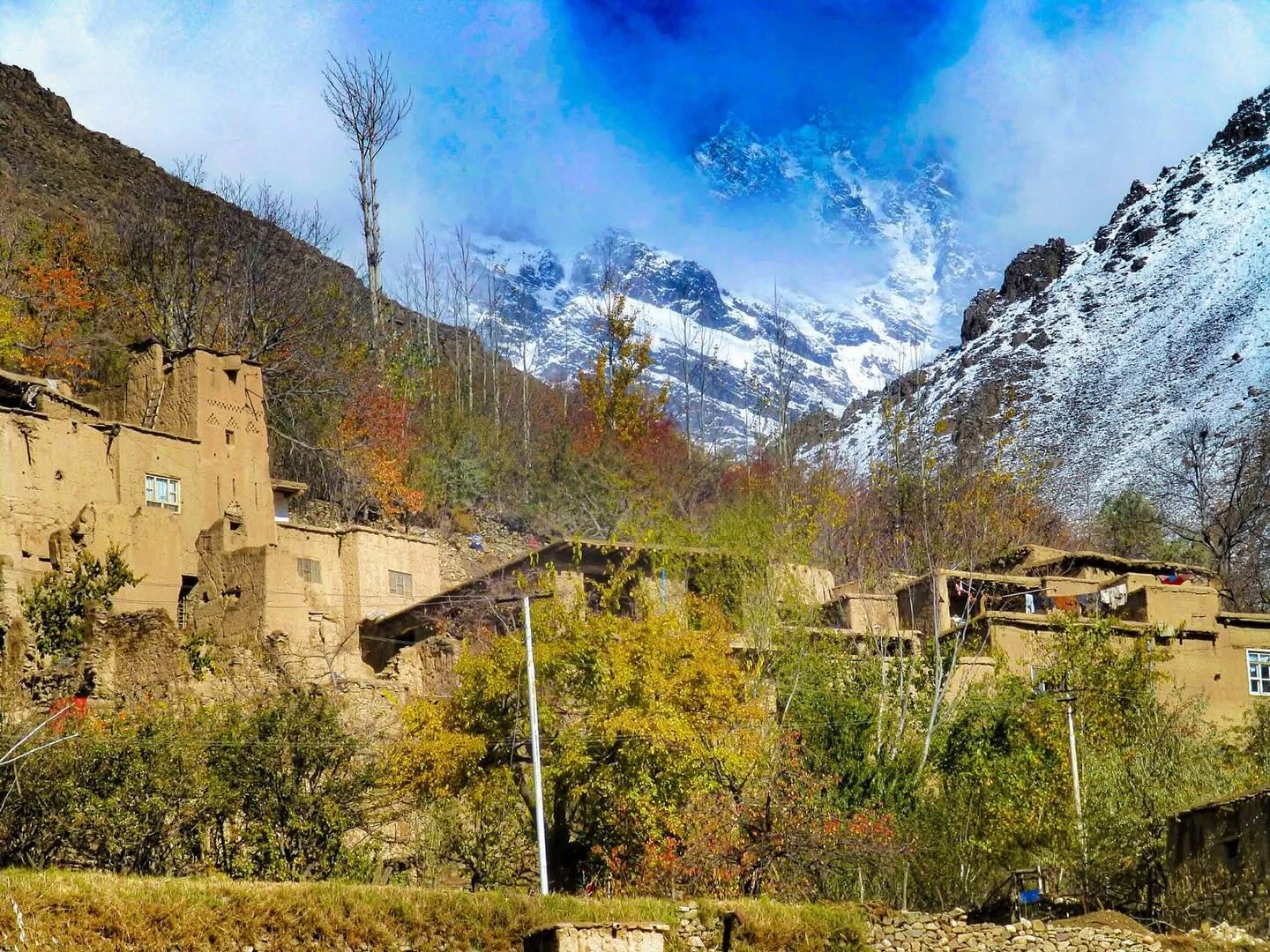
Panjshir is a province in northeastern Afghanistan, often called the “Valley of Five Lions.” The provincial capital is Bazarak. The valley is narrow and surrounded by high mountains, with the Panjshir River running along its floor and orchards and villages stacked along the slopes. In spring the valley is green; in autumn the trees turn and the first snow appears on the peaks above the villages, as in the photo at the top of this page.
The valley also has a strong place in modern Afghan history. It was a stronghold during several conflicts, including the resistance to Soviet forces in the 1980s. That history is a large part of why Afghan visitors come here, and it shapes what foreign visitors see too.
What people go to see
The main sights are not ticketed monuments in the way that Herat or Bamyan has them. A Panjshir day is mostly about the landscape and a small number of places with meaning:
- The tomb of Ahmad Shah Massoud. The commander known as the “Lion of Panjshir” is buried in the valley, and his tomb is the site most visitors ask to see. It is treated as a place of respect, so dress modestly and follow your guide’s lead on photographs.
- The valley itself. Green fields, orchards, steep walls and stone villages. Much of the day is simply driving slowly up the valley and stopping where the view opens out.
- The Panjshir River. The river is a favourite spot for picnics, and some visitors fish or just sit by the water for an hour.
- Old fortresses. The remains of older forts along the valley reflect its strategic position over the centuries.
- The bazaars. Local markets sell handmade jewellery, textiles and traditional clothing, along with fruit and nuts grown in the valley. Cultural events sometimes include traditional music and dance.
The people of Panjshir are mostly Tajik, and Dari is the main language, with some Pashto understood. A few words of Dari go a long way with shopkeepers and tea-house owners.
When to go
Our Panjshir guide recommends spring (March to May) and early autumn (September to October). Those months bring mild weather and the valley at its best, whether you want to drive and look or walk part of the way. Winters are cold. Summers are mild, but the comfortable seasons are spring and autumn.
At higher points the temperature drops quickly, so even on a warm day in Kabul, bring a warm layer.
How long it takes to get there
Panjshir is reached by road from Kabul. Our travel-to-Afghanistan page gives the drive from Kabul to Panjshir as two to three hours. That is why it works as a day trip: an early start, the main sights and a riverside lunch, and a return to Kabul in the evening.
If you would rather stay, accommodation is modest. Guesthouses and community-run lodges are available in Bazarak, and camping in designated areas is possible with proper preparation. Do not expect hotels of the kind you find in Kabul.
The rules that shape a visit
Two pieces of paper and one rule matter here.
First, you need a tourist e-Visa to enter Afghanistan, and a letter of invitation from a licensed operator is strongly recommended for the application.
Second, travel outside Kabul runs on provincial travel permits, issued through the government Afghan Tour office in Kabul. The official fee is about 1,000 AFN per province on your itinerary. Panjshir is its own province, so it goes on the permit like any other. On a guided trip, your operator handles this; with us, the travel permit is usually arranged within about six hours of confirming.
Third, and most important: under current tourism regulations, every foreign tourist must travel with an official guide or translator. Independent sightseeing, and travel between provinces without one, is not allowed. In practice this means a Panjshir visit is a guided day with a driver, not a self-drive outing.
Checkpoints on the road are normal. Carry your passport and permit, and expect to show them more than once.
Practical notes
- Cash. Banking facilities are limited in rural areas, so carry enough cash, ideally in small notes.
- Clothing. Modest clothing covering arms and legs is expected across Afghanistan. Women wear a headscarf in public.
- Supplies. If you stay overnight, stock up on essentials in Bazarak before heading further into the valley.
- Advisories. Check your government’s travel advisory before planning, and ask your operator specific questions about the dates you have in mind.
How Panjshir fits a trip
There are two common ways to include it.
The simplest is as one day of a Kabul-based week. Our private Kabul week, from $1,599 on your dates, includes a full-day Panjshir trip alongside days in Kabul, Istalif, Paghman, the Salang Pass and Qargha Lake. That product stays in and around Kabul and does not include Bamyan.
The second is as a longer private itinerary built around the valley. We do not run a fixed Panjshir departure at the moment, but we can plan a private route that includes it, with nights in Bazarak and time to walk. That is a custom quote, with the letter of invitation and permits included as part of it.
For more detail on the valley, its history, food and practicalities, see Tour.af’s Panjshir guide. If you want to see how a Panjshir day sits inside a week, the private Kabul week shows the full day-by-day plan. If you are thinking about it, send your dates and we will tell you honestly what fits.
Tour.af, Ahmad Shah Baba Mena, Kabul 1012, Afghanistan. +93 70 521 4101. WhatsApp · tour.af
Written with AI assistance and reviewed by Tour.af against its published pages.