Silk Road Afghanistan Travel: Following the Old Routes Through Balkh, Bamiyan and Herat
By Tour.af
The phrase “Silk Road” is used loosely, often for any old trade route in Asia. In Afghanistan it has a specific meaning. The country sat at a junction where routes from China and Central Asia met routes to Persia and the Indian subcontinent, and several of the places a visitor can see today owe their existence to that traffic.
This article is a short guide to Silk Road Afghanistan travel for people who care about the history: which places mattered, what survives, and how a modern itinerary strings them together.
Why Afghanistan was a crossroads
Look at a relief map and the reason is obvious. The Hindu Kush blocks the middle of the country, and travellers between Central Asia and India had to go around it or through a small number of passes. Caravans crossing the Amu Darya from the north reached the plains around Balkh; from there, routes ran west toward Herat and Persia, and south over the mountains through the Bamiyan valley toward Kabul and the passes to India.
Goods moved along these routes, but so did ideas. Buddhism travelled north from India through this region, and later Islam spread east along the same roads. The monuments that survive reflect both.
Balkh: the Mother of Cities
Balkh, about 20 kilometres from modern Mazar-i-Sharif, was known to the Greeks as Bactra and is still called the Mother of Cities. It was a major centre of Buddhism and Zoroastrianism and one of the great cities of Central Asia for centuries. Marco Polo passed through in the thirteenth century, after the Mongol destruction, and described a city of ruins that had once been magnificent.
Today Balkh is a quiet town surrounded by the remains of enormous earth walls, with shrines and mausoleums inside. It is on UNESCO’s tentative list for World Heritage status. What survives is mostly earthwork rather than standing buildings, so the visit depends on a guide who can explain what you are looking at.
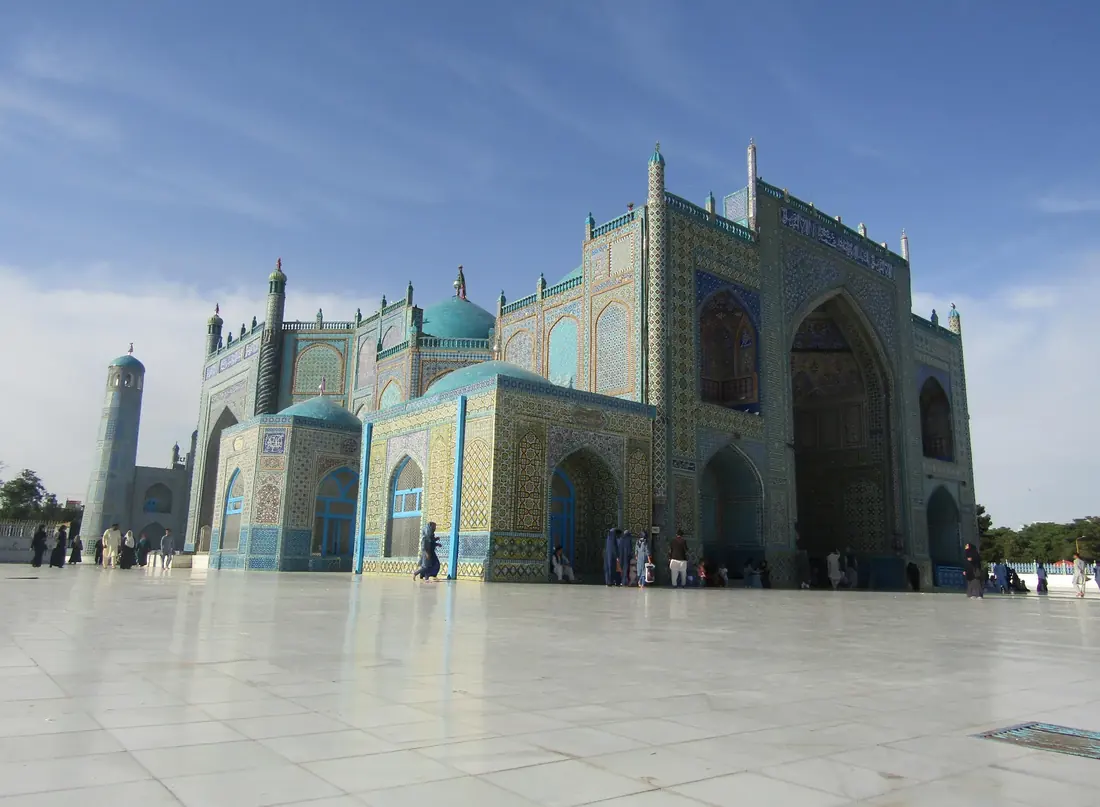
Neighbouring Mazar-i-Sharif grew later, around the shrine associated with Hazrat Ali. Its Blue Mosque, with its turquoise tilework and white pigeons, is the city’s centrepiece and the usual base for a visit to Balkh.
Bamiyan: the valley on the mountain road
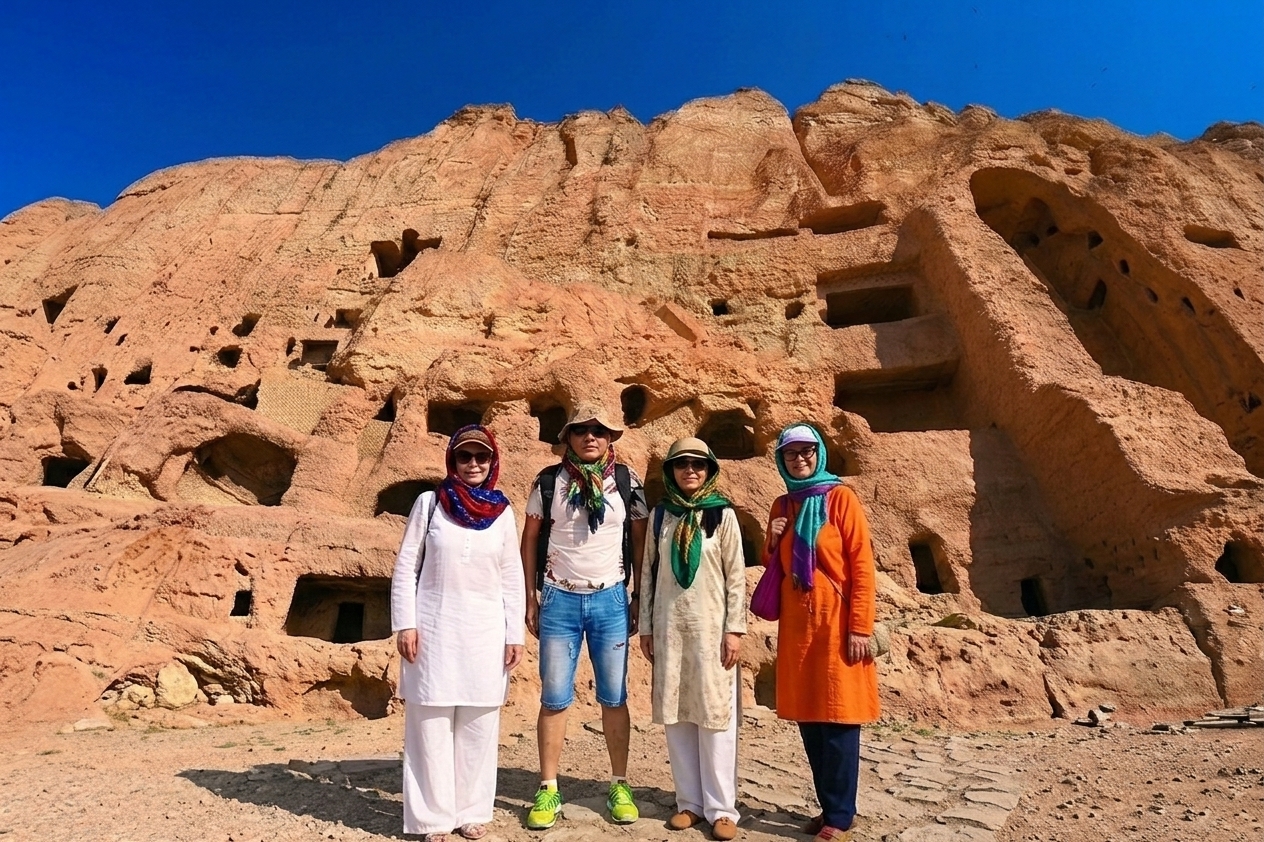
Bamiyan sits in a high valley in the middle of the Hindu Kush, on the route between Balkh and the south. Its position made it a stopping place for caravans and pilgrims, and a major Buddhist centre grew up there. The Chinese monk Xuanzang, travelling to India in the seventh century, described the valley and its colossal standing Buddhas carved into the cliff.
The two great Buddhas were destroyed in 2001. The niches where they stood remain, along with caves that once held monasteries and paintings. The cultural landscape and archaeological remains of the Bamiyan valley were inscribed as a UNESCO World Heritage site in 2003. Above the valley stand the ruins of Shahr-e Gholghola and Shahr-e Zohak, fortresses from later centuries.
Bamyan also gives access to Band-e-Amir, Afghanistan’s first national park, a chain of blue lakes held behind natural travertine dams. It has nothing to do with trade, but most visitors to the valley go.
Herat: the western gate
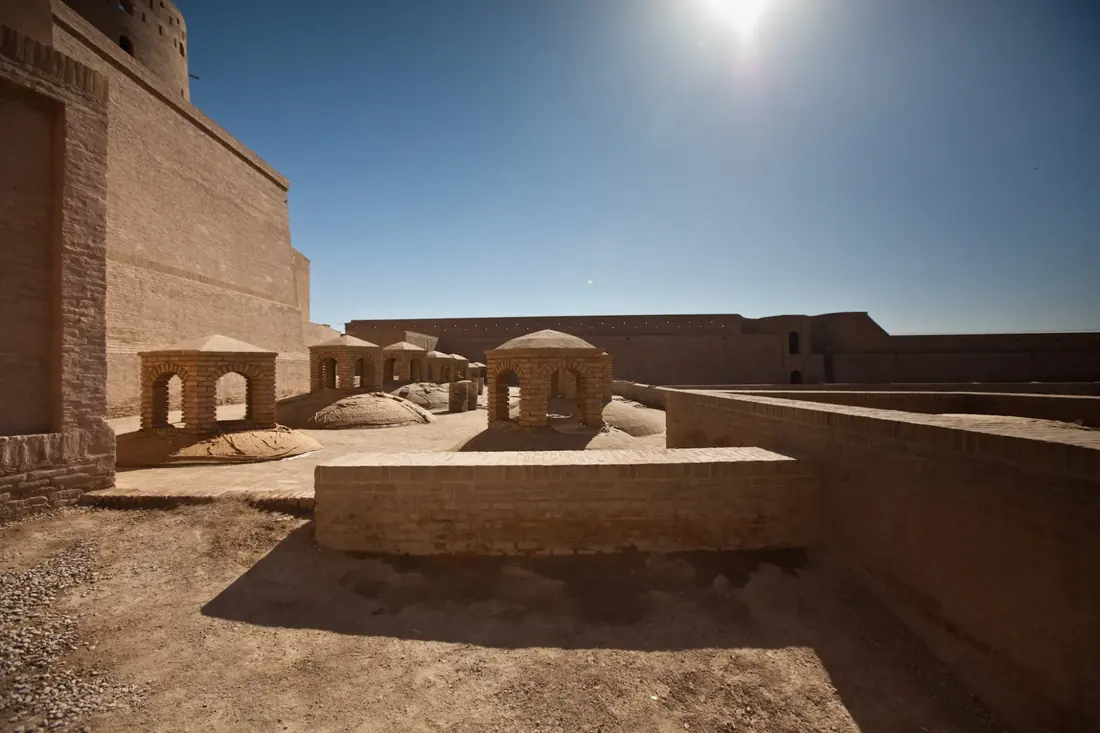
Herat stands on the routes west to Persia, and in the fifteenth century, under the Timurids, it became one of the great centres of art and learning in the Islamic world. The Friday Mosque, with its blue tilework, the remaining minarets of the Musalla complex, the tomb of the poet Jami and the great Citadel all date from or were shaped by Herat’s long history as a trading and cultural city. The old city is on UNESCO’s tentative list.
The Minaret of Jam: the hidden monument
Between Bamiyan and Herat, in a remote canyon in Ghor province, stands the Minaret of Jam, a tall brick minaret from the twelfth-century Ghurid period. It was Afghanistan’s first UNESCO World Heritage site, inscribed in 2002. It is far off the usual routes and reaching it is an expedition in itself, which is part of its appeal.
How a modern Silk Road trip is built
A modern itinerary follows the same geography. The most common shape is a ten-day circuit: Kabul first, then Bamiyan in the central highlands, then north to Mazar-i-Sharif and Balkh, and west to Herat. Domestic flights or long road days connect the regions, depending on the itinerary and the schedules available.
Tour.af publishes two ten-day versions:
- Silk Road Highlights, a small-group trip through Kabul, Bamiyan, Mazar-i-Sharif and Herat, with a maximum of five travellers and fixed 2027 departures. The current per-person price and dates are on the tour page.
- Silk Road Journey, a separate itinerary through Kabul, Bamiyan, Balkh and Herat, at $2,990.
For the Minaret of Jam, Tour.af‘s supported motorcycle tour crosses Ghor on the central route between Bamiyan and Herat.
Things to know before you go
- Permits follow the route. Each province on the itinerary must be on your travel permit, issued in Kabul. Tour.af includes the letter of invitation and permits with the quote.
- A guide is required. Every foreign tourist travels with an official guide or translator.
- Seasons. Spring and autumn suit the Silk Road cities best; Herat and Mazar can be very hot in summer.
- Dress. These are religious sites as much as monuments. Modest dress is essential.
- Read before you go. Robert Byron’s The Road to Oxiana and Nancy Hatch Dupree’s guidebooks are classic companions to this route.
Planning a Silk Road trip
The full itinerary, inclusions and 2027 dates are on the Silk Road Highlights tour page, and other routes are on the Afghanistan tours page. To ask about dates, WhatsApp +93 70 521 4101.
Tour.af, Ahmad Shah Baba Mena, Kabul 1012, Afghanistan. +93 70 521 4101. tour.af
Written with AI assistance and reviewed by Tour.af. Historical notes draw on widely published sources; tour details are as published on Tour.af‘s pages in November 2026. Check current regulations before you travel.